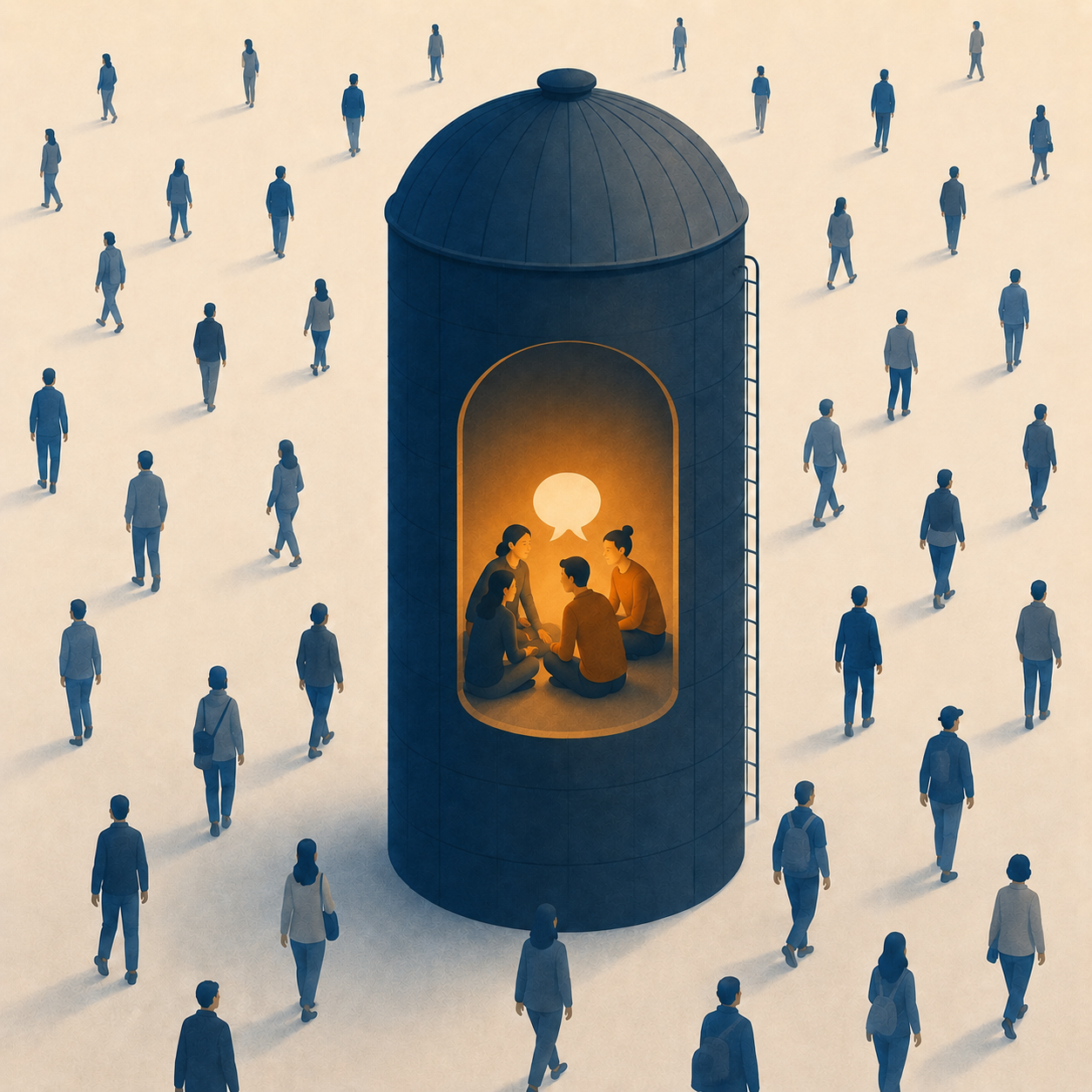
Influencers can make ideas visible, but they can also trap them in social bubbles. Real change happens when an idea leaves the bubble and becomes part of everyday life.
Influencers have become one of the newest forms of propaganda and marketing in the 21st century. Do you want to spread an idea, sell a product or start a social movement? The common advice is simple: find someone with a large audience and ask them to promote it.
Of course, using famous people to shape public opinion is nothing new. Celebrities have been used in advertising for decades, long before social media turned everyone’s personality into a potential platform. Part of the effectiveness of this strategy is the “halo effect,” a cognitive bias in which our positive impression of someone in one area spills over into unrelated areas. Is Taylor Swift recommending a new drink? If you like his music, you’re suddenly more likely to trust his taste in drinks.
Many social media users follow influencers for more than just fun; they begin to absorb their preferences, routines, opinions and values. Over time, this can transform into a new kind of social identity. We don’t just buy the product or try the habit – we start modeling ourselves on the personality and tribe associated with it.
But this is also where influencer-driven changes start to run into trouble. If a behavior is too closely associated with a personality or tribe, people outside that circle may reject it before considering whether it has value.
A new one study The so-called “paradox of influence” helps explain this problem. Popular people with many connections are not always better at spreading ideas to the wider culture. If an idea comes from a personality or a close-knit group, outsiders may dismiss it as “them” thing. But when the same idea appears in multiple circles of trust—friends, coworkers, family, neighbors, and everyday people—it starts to feel more normal. Real change doesn’t just happen because a behavior becomes visible. This happens when a behavior appears to be socially available and reinforced from different directions.
In the study, the researchers examined how health behaviors spread through real social networks in villages in Honduras. The basic idea was simple: if you want a new behavior to spread, do you start with the most connected people in the village? The surprising answer was that not always. For simple behaviors that don’t require much persuasion, such as getting the public to take a multivitamin, a popular persona can be enough to get the word out. But for behaviors that require more trust or reassurance, such as adding chlorine to drinking water, people often have to accept the behavior in more than one place before accepting it. It is not enough that the idea comes from one corner of the village. It becomes more believable if it is confirmed from several angles.
Influencers can introduce a new idea, but the culture decides whether it becomes the norm. Real change doesn’t happen just because a visible figure tells people what to do. This happens when a behavior is reinforced in multiple social circles that intersect our daily lives.
Without a strengthened ecosystem, influencer-driven changes can become wrapped up in narrow social identities. We start to associate certain habits with certain groups: “It’s a tech-bro thing,” “It’s a left-wing activist thing,” or “It’s a TikTok trend.” If an idea is too closely associated with a particular tribe, people will not judge it on its own terms. They judge the identity that comes with it. We can reject this behavior not because it has no value, but because we don’t want to confuse the kind of person who does it.
Instead of changing the world, influencers create silos for themselves, where a select group of people value them, but have little or no influence outside of their bubbles.
Different influencer silos can even become hostile towards each other. Instead of working together towards a common goal, people are more invested in protecting their favorite internet personalities and attacking rival influencers. Activism is reduced to online gossip and drama.
Celebrities and influencers can still play a role in promoting social change, but only as one node in a larger and more powerful network. Most celebrities rely on efforts that already enjoy the support of broader political, corporate, and social institutions. They can just as easily become reinforcers of the status quo as agents of change. Ultimately, celebrity influence depends on what network you’re connected to.
Real, long-lasting social change is not just about visibility and attention. This is about broad normalization. A new behavior must be woven into many aspects of daily life: talked about among friends, practiced by families, repeated in workplaces, supported by institutions, and reinforced in the surrounding culture. An influencer can help introduce an idea, but the idea only becomes powerful when it no longer depends on the influencer. You need to leave the silo and become part of the social world.
Enter your email address to receive updates on new self-improvement articles: