
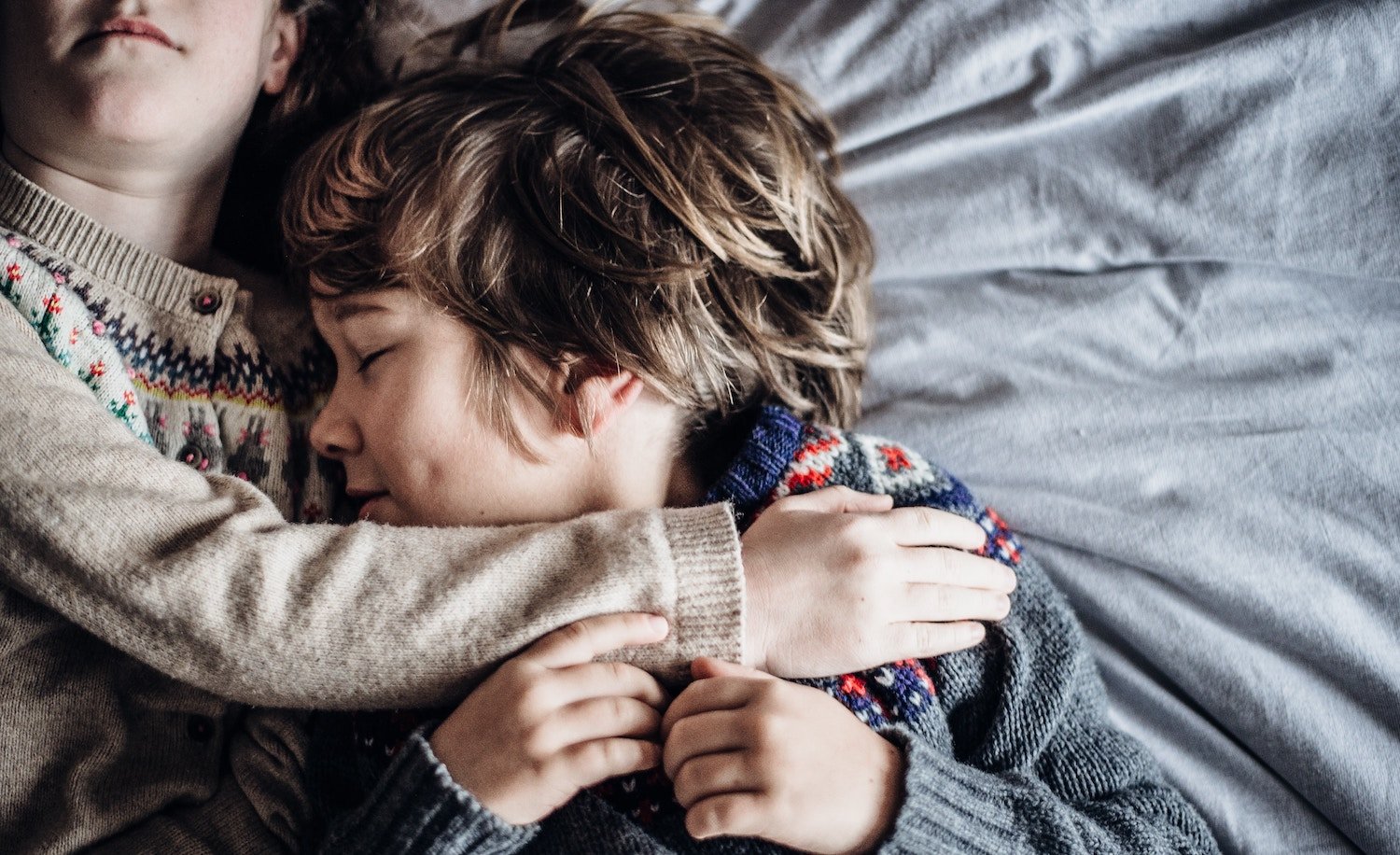

When boys don’t conform to the “boy code” and instead show their gentleness and emotions, they are often bullied and ostracized. Is there a way to stop this?
Did you know that 20 percent of the population has a sensitive nervous system, and is the trait equally distributed between males and females? Therefore, 20 percent of men are sensitive, or every fifth boy has a finely tuned nervous system.
The highly sensitive boy (HSB) is easily overwhelmed by noise and crowds, afraid of new situations, and afraid of aggressive interactions. He usually reacts more deeply and is more emotionally sensitive than the non-sensitive boy – which unfortunately can lead to bullying.
Why are sensitive boys more threatened by bullying?
According to the National Association of School Psychologists, 160,000 children in the United States miss school every day because of fear of being bullied, and more than 50 suicides are linked to prolonged bullying. Bullying at school has led to depression and poor school performance in many children.
Although research has shown that infant boys are more emotionally reactive than infant girls, by the time boys reach the age of five, they generally learn to suppress all emotions except anger. Societal values emphasize that men should be aggressive, thick-skinned, and emotionally in control—the opposite of the sensitive boy. When boys don’t conform to the “boy code” and show their gentleness and emotions, they are often ostracized and humiliated.
Bullies usually target children who are different from others. Since 80 percent of non-HSBs are neurologically wired to behave differently than 20 percent of HSBs, many sensitive boys do not fit in with the vast majority of boys.
Bullies also target children who do not fight back and respond deeply to teasing. Research shows that 85 percent of HSBs avoid fights, and that most sensitive boys become more emotionally disturbed by bullying than other boys.
5 strategies to prevent bullying
How can we prevent our sensitive sons from being bullied? Here are five strategies.
1. Develop trust in your son with the support of adults
Unconditional love and support from parents and other adults will give your son the confidence he needs to face difficult situations. Unfortunately, when one or two often-stressful adults carry the burden, it is difficult to provide the unconditional love and support that a sensitive boy needs.
Studies have shown that boys who had positive, loving relationships with adults other than parents (grandparents, aunts, uncles, etc.) reported more positive childhood experiences than those who did not. Sensitive men in India and Thailand reported happier childhoods than North Americans, which may be attributed to the role of extended family and community in child rearing in these cultures. So invite your extended family and friends to share their love with your son.
Some people believe that boys need stronger discipline than girls. However, your sensitive son will learn the lesson better if he is calm and receptive. So when disciplining your son, it is vital that you speak to him gently. If you calmly but firmly set limits, it will happen not lower your self-esteem.
Mothers tend to spend more time with their children, so they are often in a position to boost their son’s confidence. However, fathers (or uncles, grandfathers, or other male role models) need to spend special, positive time with their sons.
While the father must teach his son how to stand up for himself, he must understand, protect and encourage his sensitive son. Both father and son benefit from a father accepting his son’s sensitivity rather than trying to shape him into a non-HSB. It’s important to model setting boundaries with others so your son learns how to set boundaries so he doesn’t get bullied.
2. Make the school a safe place
Parents should regularly discuss their son’s progress with his teacher, talk to other parents, and volunteer in the classroom. If you learn that a teacher is mistreating your son, you should immediately let the teacher and principal know that their behavior is unacceptable. If the teacher refuses to change his behavior, he should not let your son stay in the classroom.
If your son is being bullied at school, it’s important to let him know effective ways to deal with the situation. According to the Youth Voice Project, which surveyed 11,000 teenagers in 25 schools, the most effective way to stop bullying was support from adults and peers. Less effective strategies were ignoring the bullying, stopping, and walking away.
Learning self-defense can give your son more confidence when facing bullying. You can ask the PTA or principal to arrange for a professional to come to the school to offer an anti-bullying program. If your son has tried the methods mentioned above but the bullying does not stop (or becomes violent), contact your son’s school. Your son’s safety and sense of well-being is paramount, so you have every reason to raise the issue with his teacher, school counselor, and/or principal.
If your son’s physical safety is in danger and the school authorities do not intervene, contact the police. However, it may be wiser to remove your son from a potentially physically violent situation if the bullying escalates.
If the bullying continues, your child may be attending a progressive private school (eg, Montessori, Waldorf, Steiner) that may better meet your son’s emotional and educational needs than a large public school. Homeschooling is ideal for the most sensitive boys as HSB thrives in a safe, quiet, less stimulating environment where they are free to pursue core and creative subjects at their own pace.
3. Help your son develop friendships
Most boys prefer to socialize in large groups, but our sensitive boys usually prefer to interact with just one friend or play alone. Because they shy away from aggressive, combative interactions, HSBs may have difficulty making friends with other boys. Your son may be better off having just one friend rather than trying to be accepted by a group of non-HSBs.
However, it may be helpful for your son to learn to navigate mainstream non-sensitive boy culture as long as the friends involved remain respectful. Take some time to discuss friendship with your son and emphasize the importance of having friends who respect him. It’s important for your son to balance alone time with friends, or he won’t learn successful interpersonal skills.
Need to soothe your sensitive nervous system?
HSPs often live with high levels of anxiety, sensory overload, and stress—and negative emotions can overwhelm us. But what if you finally felt at ease?
This is what you will find in it this effective online course Julie Bjelland, one of the best HSP therapists in the world. You will learn to turn off the racing thoughts, end the emotional outpouring, eliminate the sensory overload, and finally make room for your sensitive gifts to shine.
Stop feeling held back and start believing that you can handle anything. Check out this “HSP Toolbox” and start making changes today. Click here for more information.
4. Help your son become physically fit
When a boy starts playing sports, he feels accepted by his peers, which increases his self-esteem. Most boys participate in some team sports, but research shows that 85 percent of susceptible boys did not participate in team sports, and most preferred individual activities. Because HSBs do not perform well under peer pressure and can be deeply offended by the cruel culture of malevolent “boy teasing”, they tend to avoid such interactions.
Regardless of his athletic ability, it’s important for your son to participate in physical activity as it helps him become healthier, stronger and more confident. If an HSB has someone to teach and encourage her to play a variety of games, she can thrive—even in the callous world of men’s sports.
But before your son joins a team, talk to the coach and possibly other parents to make sure the players are treated with respect and not overly competitive. The key is to find sports activities that your son actually enjoys.
As mentioned earlier, learning some form of self-defense can really empower a sensitive boy so he can feel safe and better able to fend off bullies if needed. It is important to let the tutor know that your son needs the tutor’s support. A sensitive boy who learns some form of self-defense becomes less fearful, more confident, and often more sociable.
5. Increase your son’s self-esteem
Research has shown that the more dissatisfied a boy is with his body, the lower his self-esteem. Therefore, a sensitive boy who responds more deeply to teasing about his physical appearance than a non-HSB boy is at risk of developing low self-esteem. Although the media can have a strong influence on your son, as an adult, you are the stronger influence and have the power to let him know that his body is perfect just the way it is. Discuss how the media perpetuates myths about what a male body should look like.
Good health is an important aspect of a positive body image. Stress affects health, and since your son may be more sensitive to stress than people without HSB, it’s important to help him maintain a preventative health program by eating healthy, taking supplements, getting enough sleep, and exercising regularly.
Finally, while your son’s self-esteem may be diminished by not fitting in with the insensitive children, he will feel valued as he receives nourishment from his spiritual pursuits. Since most HSBs tend to be spiritual, you can boost your self-esteem by encouraging your son to learn to meditate, pray, spend time in nature, or read spiritual books about highly sensitive and compassionate spiritual heroes and sages.
Millions of parents of sensitive boys are trying to help their boys cope with a world that doesn’t value male sensitivity. I am sure that once you start using the suggestions in this article, you will see a positive change in your son as he will become a strong, confident and happy boy.
Want to learn more about highly sensitive people—and how you can help your sensitive son grow up to be a happy, confident man? Check out my books here.
This article originally appeared on my site blog.
You might also like:
Did you like this article? Sign up our newsletters for more stories like this.
We participate in Amazon’s affiliate program.



