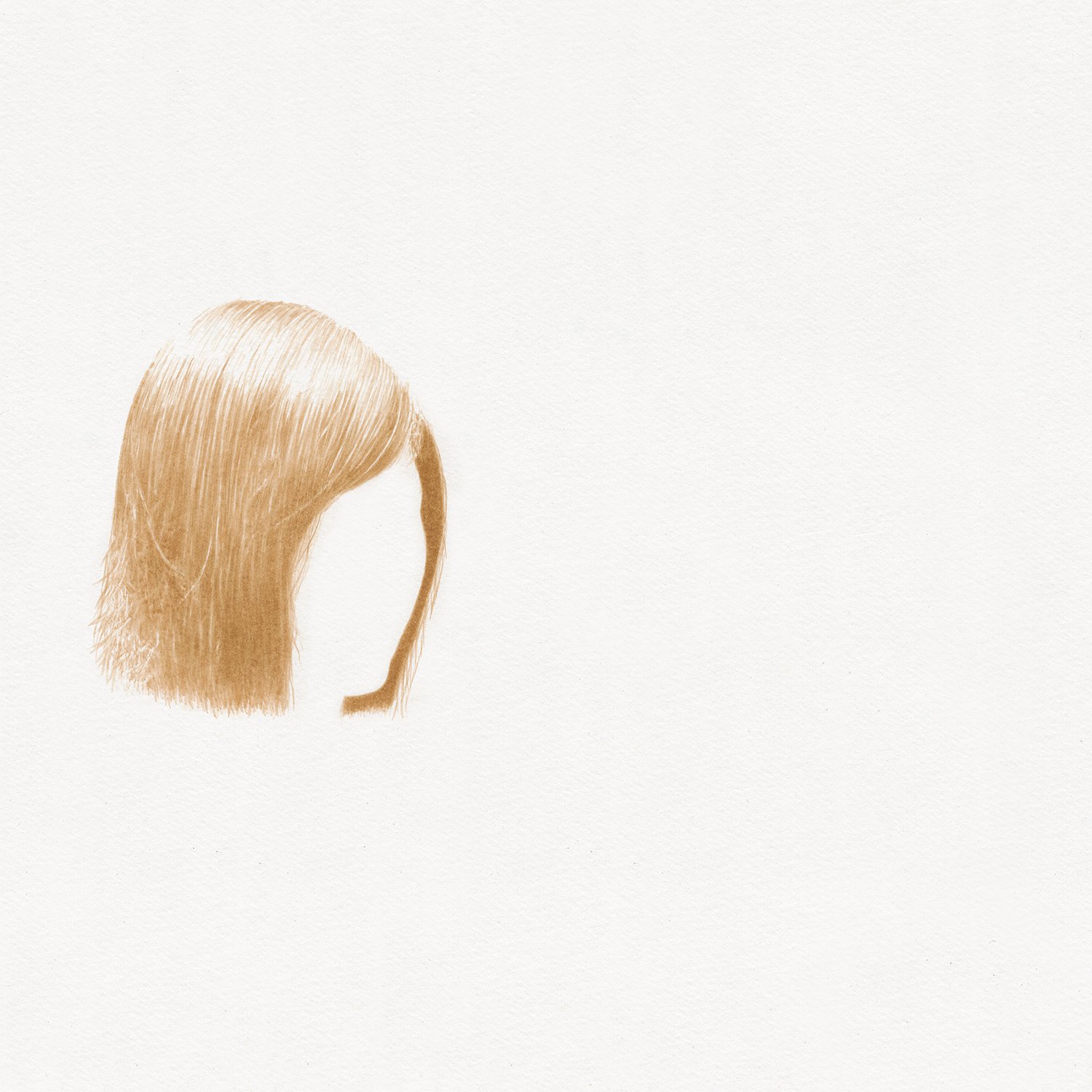

When I first visited Kazumi Tanaka’s studio in a renovated brick building at the end of a small bridge over a stream in our city, he showed me a series of tea paintings he had been working on since 2007, each image brushed on a ten-by-ten-inch sheet of paper and linked to a memory from his childhood in Osaka. Kazumi expected the images to gradually fade over time, turning the weeks and months spent with each drawing into a meditation on temporality and fleeting memories. He carefully stored the drawings, rarely exposing them to the light, and over time the pictures showed no signs of fading, the yellowish lines and shades even deepened on the pale yellow paper.
Kazumi laid out the drawings for me on a table, covering each work with a square sheet like the pages of a book to reveal the image underneath, then covering it again before moving on to the next. The order of the drawings seemed deliberate, the types of tea leaves used for each drawing varied, depending on chance and experiment. Working on a small scale and turning each page to see the next image added to the intimacy of the experience. The detailed simplicity and delicately measured features, the shift in perspective and distance, the repetition of certain ritual objects, the peculiarity of the flowers, the changing position of the drawing on the page, which usually occupied part of the square field – all these aspects spoke of the art of the work, an art that reminded me of the classical Chinese double-leaf butterfly album.
Small, delicate, portable – the Chinese album combined poetry, calligraphy and painting into a series of reading and seeing exercises. Believed to have originated during the Tang Dynasty, when Buddhist sutras were being translated and disseminated, the traditional album consisted of a series of images of a single or mixed subject, such as flowers, birds, animals, human figures, bamboo, or landscape—the world in details of the world. Painter and writer Shitao (1642–1707) made a lasting contribution to art. Shitao or Daoji, a cousin of the “mad monk” painter Bada Shanren (one of his seals, we are told, is “control freak”), lived most of his life through the 17th century Ming to Qing transition as an itinerant Buddhist monk and painter. Shitao believed that personal belonging included an “absolute sense of place” and saw the concept of a single brushstroke as the origin of all phenomena: “Mountains, rivers and I unite in spirit and merge into a single line.”
Shitao’s innovative album Returning home part of the collection of the Metropolitan Museum of Art in New York. Twelve paintings are paired with twelve poems, flower and plant images alternate with landscapes, while the calligraphic style of each poem changes according to the content and style of the paintings, or the style of painting changes according to the style of calligraphy, the thread stamps harmonizing with the design. A small spot of color only appears on the face of the lone traveler until the fifth leaf, who is gliding squinting from the cold. Sometimes a poem fills only a small part of a letter; other times it fills half a letter or a whole letter. Shitao made the album at a turbulent point in his life. He was born to a Ming imperial prince who was killed when Shitao was only 4 years old when he tried to claim the throne. He took a Buddhist vow to avoid persecution in the newly established Manchu state. After almost forty years of monastic life, he traveled to Beijing to accept a second audience with the Kangxi Emperor. He failed to gain imperial patronage and quickly became disillusioned with the “floating world” of the capital. “Tenfold bitter coldness” gripped him when he traveled south to Yangzhou in 1692. He made his album at the end of 1695, during another period of migration. “In terms of antiquity,” asks Shitao, “how could I have learned from it without transforming it? He left the Sangha a year or two later to devote himself entirely to his art as a lay Taoist and teacher.”
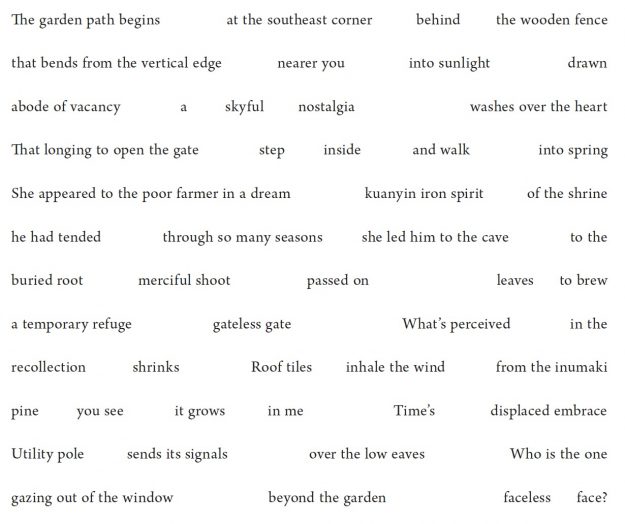
After the initial encounter, words and lines emerged in me from Kazumi’s drawings. The thoughts are not tied to a single narrative, a single theme, an image, which opens the way to the world of connotations that revolve around the icon of the presence and absence of the home. Fearing that I was using his own childhood memories and dreams for my own nefarious sanctification, I asked Kazumi how he felt about the possible association of words with his images. Instead of spitting in my face, he encouraged me to continue. We talked more about the drawings and his family history. Was there a way to conceptualize the drawings as Tōru Takemitsu did? conceptualized the reverie of water on that Papunya painting? Can poems be a gift to drawings as poetry is to words? What transpired in the writing was a loose rhythm, using Kazumi’s images as a visual connection between the individual poems – each image is a unit of poetry – so that the end of one poem foreshadows the image that follows, while each poem dwells on the image before it. Like Shitao’s album, the drawings and poems in our little book seek a paradoxical way home when returning is impossible.
In his heart Go Home No Home Go Home No Home Kazumi’s mother is a long-time follower of Tenrikyo, a religion heavily influenced by Shintoism and Buddhism. Just a few decades younger than Mormonism, Tenrikyo originated in the 19th century through the teachings of a peasant woman, Miki Nakayama, whose Tenri-O-no-Mikoto revelations were recorded in it. Ofudesaki (The tip of the buttermilk brush). Tenrikyo tells us that the body is a borrowed thing, borrowed thing from God the Parent, and so on hinokishinor daily service, you can wake up the divine intention within and attain the Joyful Life.
Divine intention. Divine transplant: what the illustrious dice-throwing French poet of a distant century felt to be the “spiritual task” of poetry in its movement from fact to ideal through the perception of relationships and vital rhythm, “every soul a melody renewed”. A generous and melodious soul, Master Hiroaki Sato contributed Japanese translations to the poems to complete the circle of the album – home-no-home, line by line, crossing the ocean back to the place of the mother tongue. Shortly after the album was finished, Kazumi’s mother passed away and her house in Osaka—the house Kazumi grew up in, the house you see here—was bulldozed. Whatever ideal the poem reaches for, whatever transposition of language, experience and vision, it remains through the memory space of shadows and lights, here in the traces of tea and ink, images and words.
—Jeffrey Yang


(Nest. 10 by 10 inches. Irish morning tea on paper.)
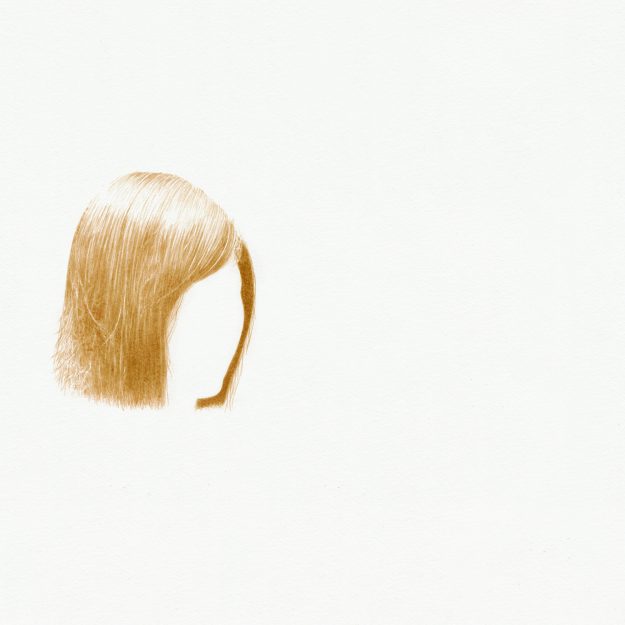
(Girl. 10 by 10 inches. Oolong tea on paper.)


(Sunflower. 10 by 10 inches. Sabbathday Lake Shaker chamomile tea, green tea, Earl Gray tea on paper.)


(Maternal. 10 by 10 inches. Houji tea on paper.)
♦
Jeffrey Yang (with drawings by Kazumi Tanaka), excerpts from the movie “No Home Go Home / Go Home No Home”. Line and light: Poems. Copyright © 2022, Jeffrey Yang. Drawings copyright © Kazumi Tanaka. Reprinted by permission of The Permissions Company, LLC on behalf of Graywolf Press, Minneapolis, Minnesota, graywolfpress.org.