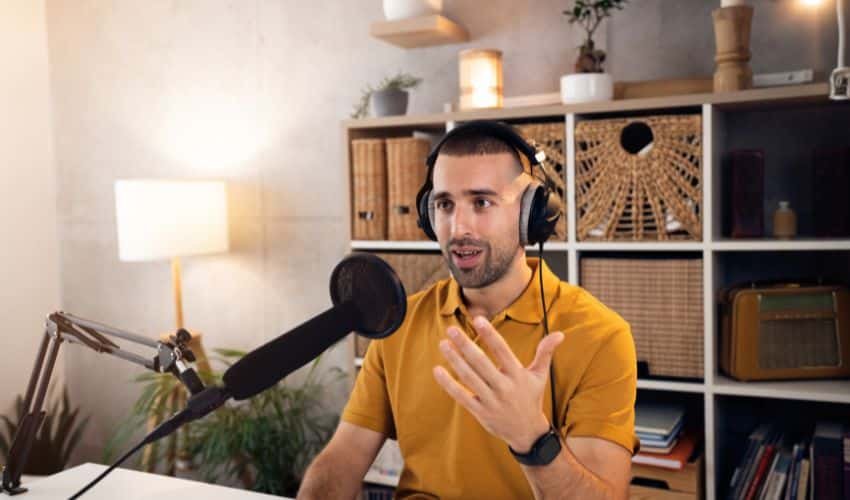

Many of us cringe when we hear the sound of our own voice. This is a common human reaction. However, it is possible for us to overcome our aversion to our own voice and confidently guide others in meditation.
The process has nothing to do with changing the way we speak. By strengthening self-awareness and developing compassion, we become more confident not only in our authentic voice, but also in mindfulness practices that can transform our self-critical habits.
Why don’t we like the sound of our own voice?
Physiology is partly to blame for why we hate the sound of our own voice, according to research. We just don’t hear our voices the way others do. Because sound vibrates when it makes contact with an object, what we hear from inside our heads is different from what other people hear when our sound is radiated outward towards them. In fact, parts of the auditory cortex, the part of our brain that processes sound, shut down when we speak. What we hear about our own voice is therefore incomplete.
Our perception of our voice is clouded by our psychological makeup, our perception of other people’s reactions, and our past experiences that have led to biases. We know from the teachings of mindfulness that one person does not like an experience, while for another the same experience can be neutral or even pleasant. What is the reason for this difference? Our history and habitual reactivity can contribute to harsh self-criticism, perfectionism, or unhelpful, false expectations.
If we don’t pay enough attention to our inner critic, we hinder our personal growth. Not only do we not reach our full potential, but we also risk never sharing our best selves with others.
Mindfulness practices can help quiet the voice of self-judgment and bring forth the voice of self-acceptance and self-compassion. The latter is the most authentic reflection of our true self, and others benefit immeasurably from sharing it.

Listen to yourself with compassion
Learning to love your voice starts with practicing self-compassion. Those who cultivate true self-compassion can also be great teachers. Once we learn to gracefully handle our own perceived shortcomings, we can authentically help others do the same.
Practicing self-compassion begins with recognizing when the voice of self-criticism is heard. With the help of mindful attention, we can begin to distinguish between the voice of the inner critic and our truest, most authentic voice. The conditioned voice of self-criticism is often the voice driven by fear, pride, jealousy, or misplaced anger.
We all have an inner critic. When we realize that self-judgment is a universal, shared human experience, the idea that this voice is “us” is immediately softened. We understand that you don’t have to listen to this voice or believe what it says.
Instead of energizing the voice of judgment or shame, we can intentionally bring forth the voice of compassion. In those moments when you hear that inner critic telling you that you don’t sound good enough, that you don’t fit the mold, or that people won’t like you, ask yourself, “What would the voice of self-compassion say?”
If you’re not sure, try practicing (silently or out loud) what you would say to your closest loved ones if you questioned whether your voice was good or bad, right or wrong.
Dr. Chris Germer, a self-compassion researcher and expert in anxiety disorders, suffers from public speaking anxiety. It was only when she began to practice self-compassion consistently that she was able to overcome impostor syndrome and the shame associated with it. He learned that if we first hold ourselves in loving-kindness, we can hold onto our experiences in the same way.
Your unique voice as a meditation guide
As a meditation guide, you teach what you embody. Just as you want your students to embrace their most authentic selves and boldly share their best selves with the world, so can you. Part of your presence as a teacher is to unapologetically share your unique voice with all its perceived imperfections.
Simply reminding yourself to “practice what you preach” can help shift your focus from the sound of your voice to the message it conveys. As a meditation guide, you know you can practice your focus. Remember again and again that your embodied courage and authentic presence is your greatest asset—not the voice with which you share it.
Start by teaching meditation to friends and family, either in a one-on-one or small group setting. However, as you build skill and confidence, be aware that you can never influence how others perceive you. Make sure you don’t avoid opportunities to share mindfulness with strangers, or even compassionately evaluate your own recordings. Although it is important to move at your own pace and let yourself go baby steps to couragewe also grow by taking risks.
Learn what it means to model mindfulness. Not just as a mindfulness teacher, but as anyone who wants to help others feel supported and accepted.
Mindfulness exercises to evoke your voice
For a teaching experience rooted in acceptance, self-compassion, and courage, the following mindfulness meditations can help you cultivate a grounded presence in the face of uncertainty:
The following conversations with experts in mindfulness and meditation can help you see vulnerability as part of the wisdom of teaching.
Once you have established mindfulness and self-compassion, the following exercises can help you center yourself and ground yourself in authentic presence before leading a session.
Conclusion
We are all on an ongoing journey and are given endless opportunities to deepen our attention and compassion along the way. It’s helpful to note that we don’t have to be perfect as meditation guides, but we do have to commit to walking the same path we encourage others to follow.
With grace and loving kindness, we can reflect on our relationship with our voice and consider how we can take small steps toward accepting it. Everything we learn in the process can be shared authentically, helping others to embrace their own higher self with compassion and trust.