
“Another sign of health is that fear and trembling do not destroy us, but take it as a message that it is time to stop fighting and look directly at what threatens us.” – Pema Chödro
Wthoughts or images come to mind when we consider what a healthy lifestyle is it about For many people, the concept of a healthy lifestyle conjures up ideas about physical well-being and how to best maintain it. I totally agree that the physical fitness of our bodies is related to both building and growth optimal operation over time. When the body is healthy and in a balanced state of relative homeostasis, it is not uncommon for the mental, emotional and interpersonal spheres of life to feel similarly balanced and peaceful. However, the necessary building blocks are a optimal for you it embraces the more dynamic and intangible aspects of wellness than in the gym.
You are much more than a physical body. Regardless of how many miles you run, lift weights, or follow a diet, physical health and fitness alone are usually not enough to take care of your optimal self. By this I mean the mental picture in your mind of the best version of yourself… your ideal self. I hesitate to use the word potential because the word is sometimes associated with abilities or achievements that can be measured by various external standards. Instead of thinking about your ideal self in reaching your potential – however we define that term – see your optimal version of yourself as an integrated, coherent manifestation of your personal traits, values and aspirations into reality. This unique vision of your ideal self is for you – and you alone – to imagine, shape and make a reality. In this sense, you are full of virtually unlimited potential.
The main components of the “Optimal You”.
TA diversity of skills, attitudes and lifestyle choices are the fundamental building blocks of creating the “optimal you”. Try reading through the following essential ingredients personal development (adapted from Hodges, 2010). Pause to notice which aspects of your personal development stand out as areas of strength for you, and which areas could use further growth or attention. Remember that not all components of personal development will be important to each person, and that an important step in building your ideal self is to connect authentic values. For example, maybe spirituality/religion has little personal significance for you…or maybe it is the most important value of your ideal self. Both answers, and anywhere in between, are perfectly fine.
- Spirituality / Religion
- Personal vision
- Self-worth
- Setting goals
- Rational thinking
- Emotional intelligence
- Flexibility
- Humor
- Fitness / Recreation
- A healthy diet
- Conscious Life
- Stress management
- A sense of self
- Family/cultural connection
- Career development
- Hobby
- Social life
- Intimacy
Wwhen you get in touch with your true values, take the time to stop, reflect, and consciously tune in to what you really are most important thee. If it’s very important to you, then it’s probably something you value a lot… if you don’t personally think it’s important, then maybe you don’t value it very much. There is no judgment when it comes to your personality clarification of values process. If your values and behaviors are not in line, you may experience internal discomfort or cognitive dissonance. Fortunately, this inner discomfort is an opportunity to listen to your intuition and tap into it wise mindand notice how you can begin to change your thoughts and behavior to more accurately reflect a core values.
Sometimes it’s hard to tell whether you’re striving to build your ideal self because of social pressure, other people’s expectations, or your own inner wisdom. It’s natural to internalize your thoughts about who you are, who you should be, or who you shouldn’t be based on the messages of your earliest relationships… with your primary caregivers or annex figures. You may have received an inaccurate one mirroringemotional invalidity or inconsistency tuning in in the context of these early relationships, which can make it difficult for him to firmly grasp the essence of himself as an adult. Although it can be difficult, but there is available… and an incredibly valuable journey of self-discovery.
– – – – – – – – – – – – – – – – – – – – – – – – – – – – – – – – – – – – – – – – – – – – – – – – – – – – – – – – – – – – – – – – – – – – – – – – – – – – – – –
Additional resources:
Hodges, S. (2010). Counseling Practice and Practice Handbook: A Resource for Graduate Counseling Students. New York, NY: Springer Publishing Company.
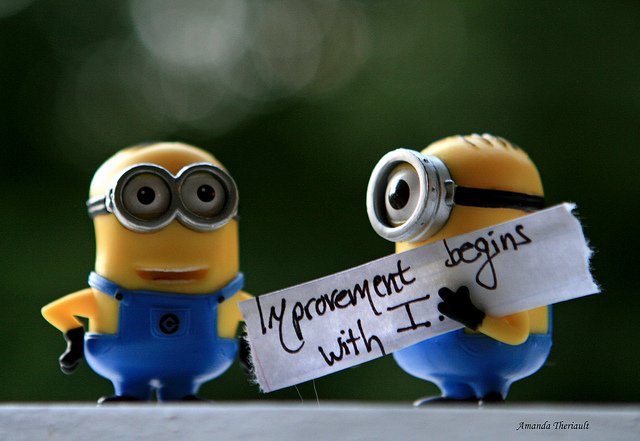
Featured image: 9032013 by Amanda T Photos 🙂