

“Take care of your body. It’s the only place you have to live.” ~Jim Rohn
I used to think that fatigue was a personality trait.
I was the person who could work fourteen hours, sleep five, and do it again. I wore my exhaustion as armor. This proved that I was serious. It proved that I was committed. It proved that I was worth something.
What it actually proved was that I drove my body into the ground.
The surgeon who couldn’t heal himself
I trained as a surgeon in London. My days began before sunrise. They ended long after it started. Meanwhile, I made decisions that affected people’s lives while running on caffeine and willpower.
I was good at my job. I was terrible at taking care of myself.
The irony was not lost on me. I could look at another person’s body and see exactly what was wrong. I could diagnose, treat and fix. But I couldn’t see what was happening in my own body.
The moment everything changed
There was no dramatic collapse. It was a quiet Tuesday. I was walking to see a patient at 2 am. My legs felt heavy. My vision went blurry for half a second. I leaned against the hallway wall and waited for it to pass.
It wasn’t an emergency. Something was worse. It was a sign I ignored for years.
I was thirty-three years old. My blood work was normal. My colleagues think I look good. But I knew something was wrong. I just didn’t know what.
What I found when I stopped running
A colleague suggested meditation. I laughed. I didn’t have time to sit still. I barely had time to eat.
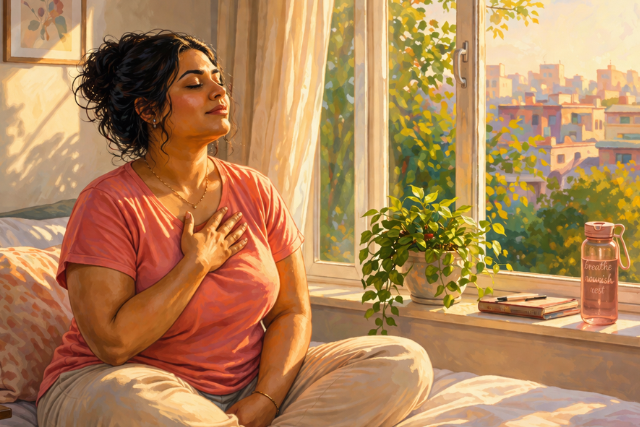
But one morning, more out of desperation than curiosity, I sat on the edge of my bed for five minutes before my shift. No phone. There is no plan. He’s just breathing.
It felt senseless. But the next day I did it again. And the next one.
After two weeks, something changed. I started to notice things that I was too busy to notice. The tension in my jaw. The shallow breathing that has become the default. As I ate without tasting anything. Just as I fell asleep not from rest, but from exhaustion.
Slowing down didn’t improve anything overnight. But it gave me the clarity to ask a better question: What does my body really need?
Looking below the surface
As a surgeon, I was trained to see damage after it was done. Scar tissue. Worn joints. Clogged arteries. I dealt with the consequences, not the causes.
When I started reading about cellular health, I realized that the damage we were seeing in patients didn’t happen overnight. Over decades, it was built up quietly, in small steps, every moment when the body asked for rest and received stress instead.
I learned that every cell needs special molecules to produce energy and repair itself. I learned that these molecules decrease with age. I learned that the tiredness I felt was not laziness or weakness. My cells were running out of what they needed.
For the first time, I looked at my own health as well as my patients. With curiosity instead of judgment. With data instead of assumptions.
The small changes that made the biggest difference
I didn’t transform my life in a week. I made one change at a time.
First, sleep. I committed to eight hours even when it meant turning down invitations and leaving work early. The crime was real. The results were undeniable.
Then movement. They don’t penalize gym sessions. Just to walk. Every morning thirty minutes before I looked at my phone. Rain or shine. This became my reset button.
Then food. I stopped eating for comfort and started eating for my cells. More berries. More vegetables. More olive oil. Less sugar. Less alcohol. Not perfectly, but consistently.
Finally, silence. Five minutes of morning breathing became ten, then twenty minutes. Meditation was not spiritual to me. It was practical. It helped me spot the stress before it did damage.
Which I wish I had known sooner
I wish someone had told me that being tired isn’t a character flaw. This is information.
I wish someone had told me that the body doesn’t wait for the right time to crash. It accumulates damage in the background, in sleepless nights, missed meals, swallowed stress.
I wish someone had told me that prevention isn’t dramatic. This is boring. It’s sleep and walking, vegetables and sitting quietly for a few minutes. And it works.
Where am I now?
I have more energy today than I did when I was thirty. I wake up without an alarm clock. I exercise because it feels good, not because I feel guilty. I eat slowly. I breathe deeply. I sleep well.
I’m not a different person. I just stopped ignoring what my body was telling me.
The surgeon, unable to heal himself, finally listened. And it turns out that the prescription is simple: slow down, pay attention, and take care of your one body.
If it is running empty
No need for a full lifestyle. You need a good decision today.
Sleep another hour. Walk without your phone. Eat something colorful. Sit quietly for five minutes and notice how your body feels.
Your body is talking to you. It’s been a while. The question is whether you are willing to listen.
Start there. The rest will follow.

About Dr. Prarthana Venkatesh
Dr. Prarthana Venkatesh is a London-trained surgeon, award-winning researcher and a Longevitya longevity supplement based on clinical insight and the science of aging. He writes about health, awareness, and the intersection of medicine and everyday life.